Critical Authenticity Design

Introduction

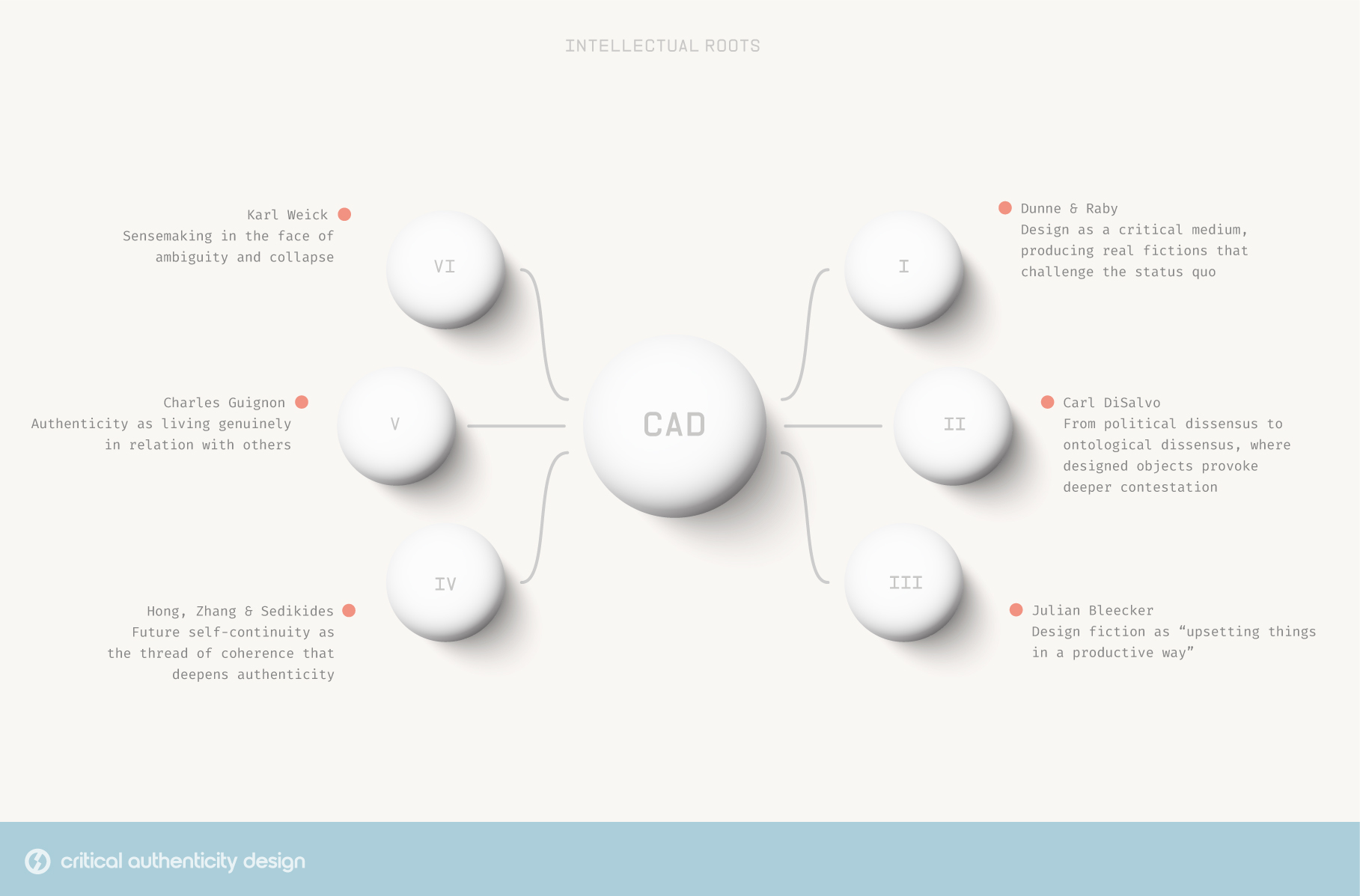
Critical Authenticity Design (CAD) is a research direction and design attitude. It begins from a simple but unsettling claim: authenticity is not secure. It is always contested and always shaped by the systems that surround it. CAD treats authenticity as a question to be asked — repeatedly — through design.

The Premise

CAD starts from the idea that authenticity and future self-continuity are precarious constructs. They can fracture or collapse by design. Thus, CAD intends to work through them and embraces rupture as a method. The ethical imperative is clear (first, not harm), but within that limit, CAD uses disruption to reveal how meaning is made/unmade.

CAD does not concern itself with technical efficiency (bridge engineering, dishwasher pumps, traffic lights). Its scope lies wherever design touches identity, memory, relationships, meaning, or imagined futures (where authenticity and continuity are at stake).
The Mechanism

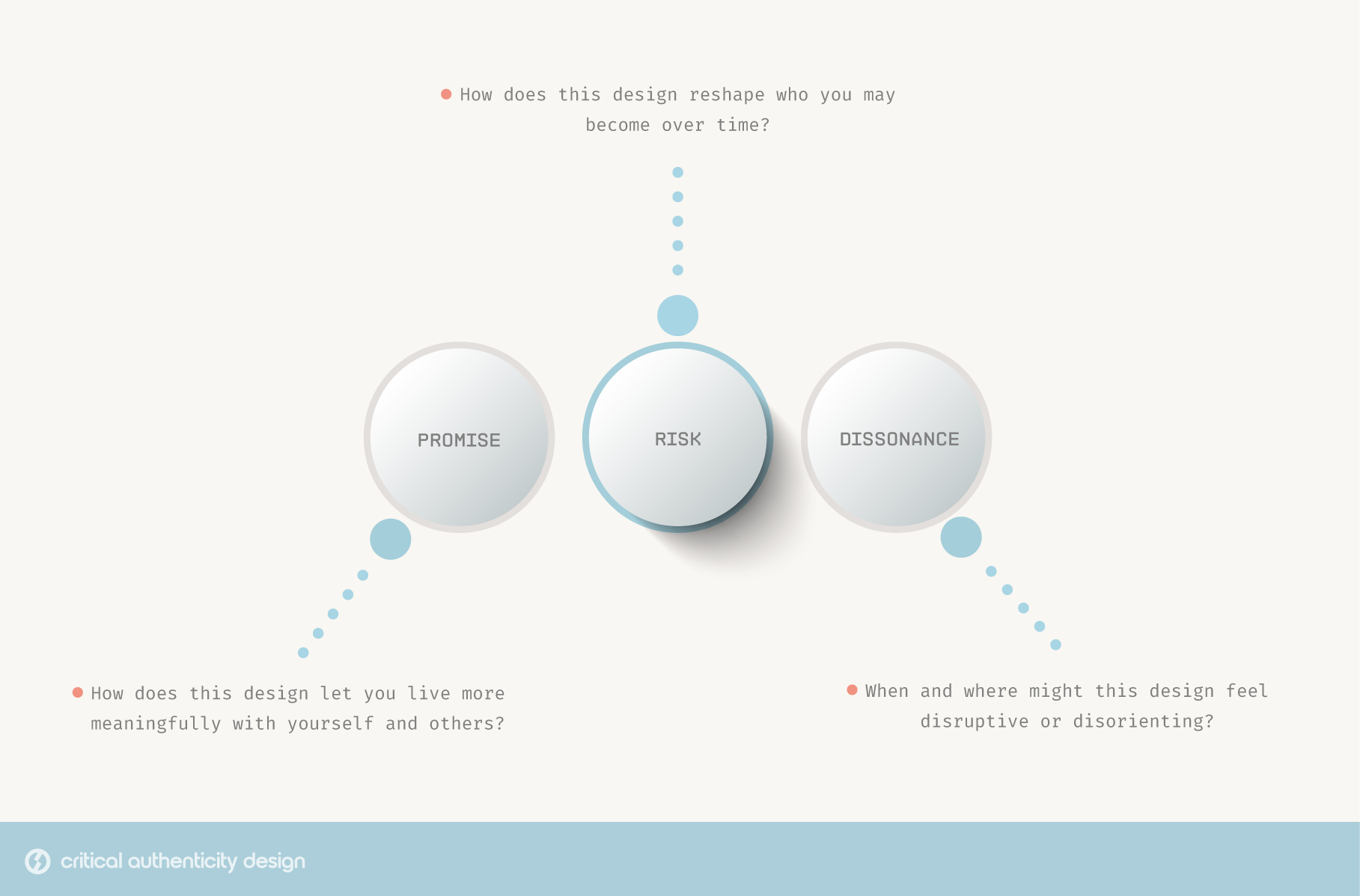
If CAD is the lens, its method is the Forced Reflection Point (FRP). FRPs are moments that break the flow of the taken-for-granted and compel reflection. They are the friction where assumptions and comforts are exposed. FRPs are deliberate encounters that make visible the fragility of authenticity.

  • Example 1 (AI Griefbot): It is designed to “evolve.” It uses a large language model to generate responses that feel like natural progressions of the deceased’s personality, potentially offering advice on problems they never encountered in life. FRP: the bot says something that feels almost right, but is slightly off-tone or presents an opinion the deceased would never have held.

  • Example 2 (AI Griefbot): A griefbot commissioned by a dying individual to teach their child or grandchild about their life values as they grow up. FRP: the now-teenage or adult user encounters a complex life situation where the bot’s pre-programmed advice is insufficient, outdated, or morally simplistic. The FRP is the painful realization that this guide, which once felt like a source of truth, has its limits. The user is forced to reflect: Am I living my life, or the life my deceased parent programmed for me? Where does my own authenticity begin?

Futures

In Futures, CAD is presented as both attitude and provocation. It creates spaces of discomfort where reflection becomes unavoidable. CAD asks whether design can responsibly harness rupture — to expose what is truly at stake in how we live and imagine ourselves into the future.

Closing Reflection

Can design hold space for those fractures without commodifying them? Can rupture be ethical, even healing? CAD leaves these questions open, because authenticity itself only survives in the struggle over what feels real.
