Pyramid of Authenticity

The model is presented here as a conceptual possibility. Its role in Futures is to provoke reflection on how authenticity might be preserved or even disrupted in cultures increasingly intoxicated with inauthenticity.

Overview

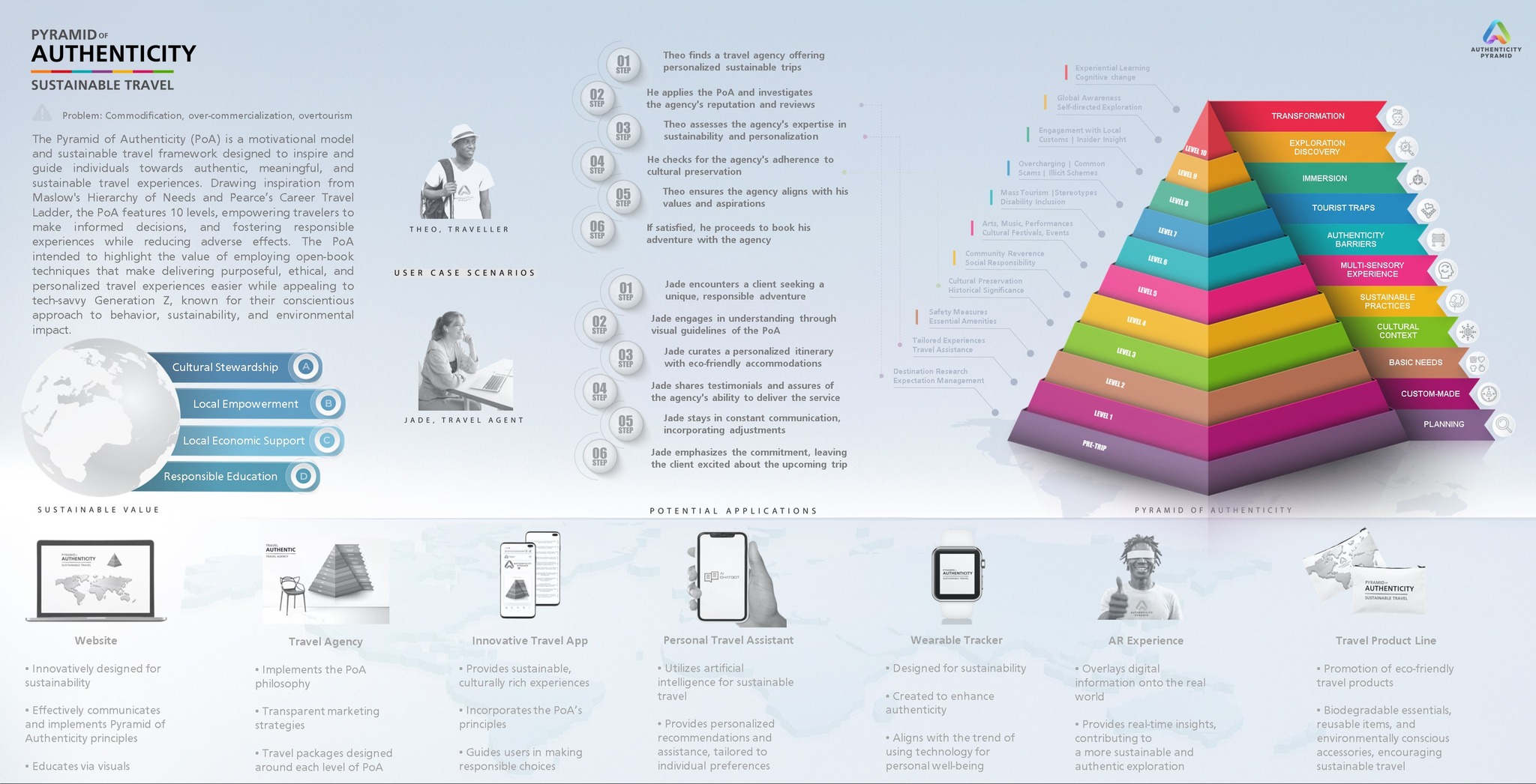
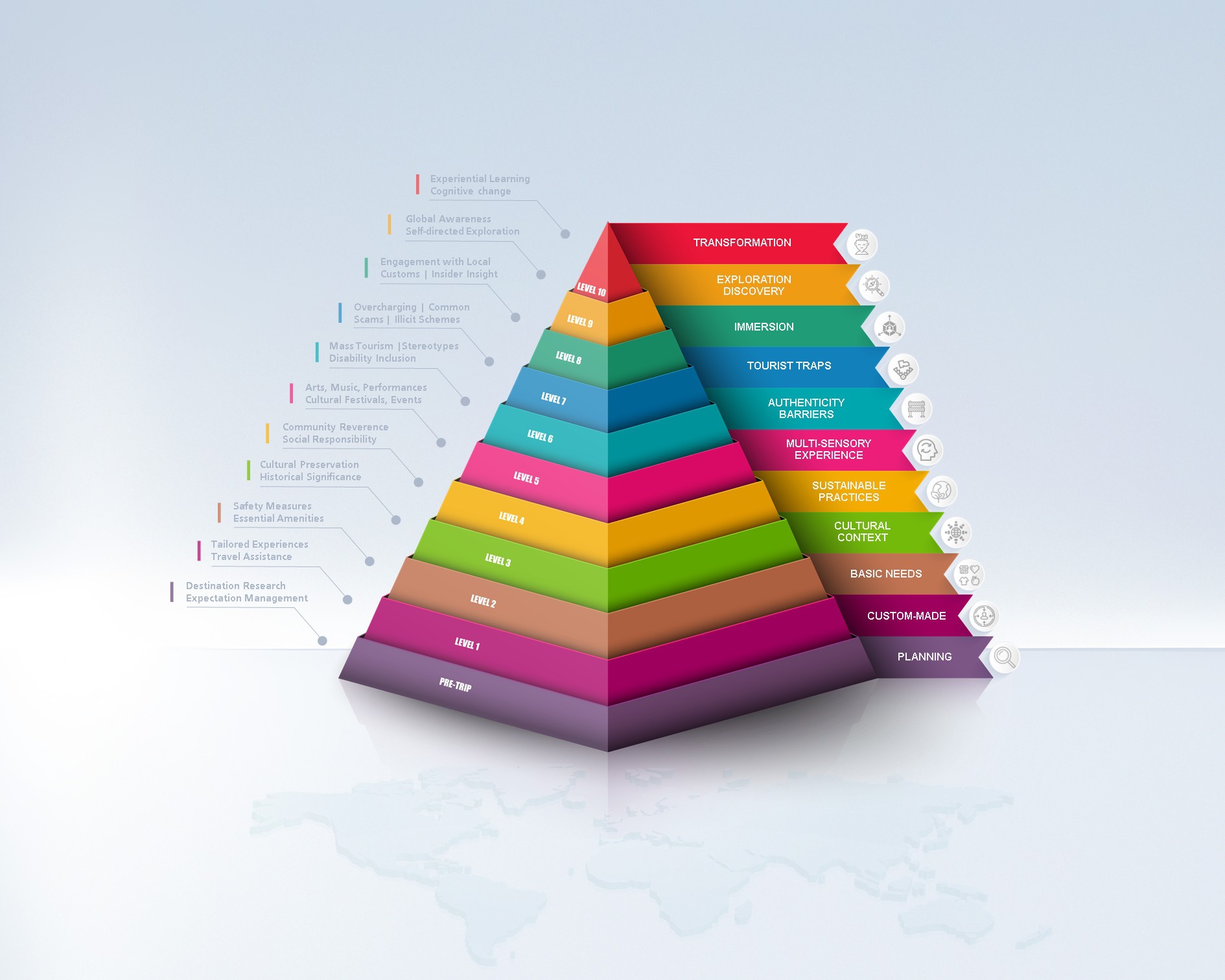
The PoA is a framework I first developed during my MA research, and it continues to evolve as a speculative possibility. Modeled loosely on Maslow’s hierarchy and Pearce’s travel ladder, the PoA maps how experiences of authenticity in tourism can be challenged and reimagined.

At its core, the Pyramid illustrates ten levels of engagement. Each level highlights the interplay between commodification and possibility, while inviting reflection on what it means to “seek authenticity” in an era often saturated with commercialized experiences.

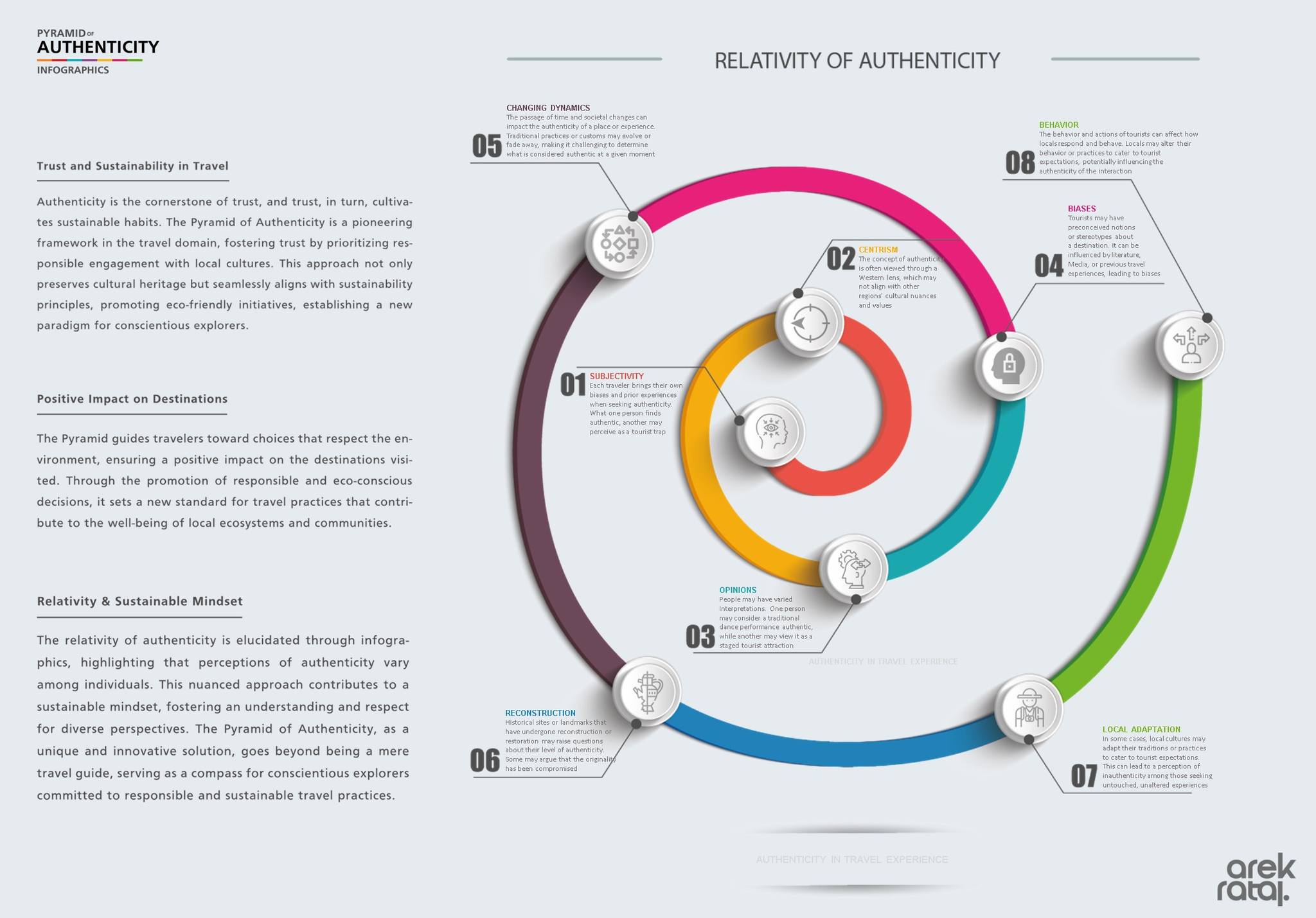
Relativity of Authenticity

Authenticity is negotiated and often contested. The spiral model emphasizes how perceptions of authenticity are shaped by cultural bias and adaptation. What feels authentic to one traveler may appear artificial to another; what is seen as “authentic” in one cultural lens may not hold the same meaning in another.

This relativity is a crucial insight: authenticity is responsive to social change and tied to context. The PoA framework embraces this complexity rather than reducing authenticity to a checklist of “real” or “fake” experiences.

Sustainable Futures

The Pyramid of Authenticity also opens speculative futures. By linking cultural stewardship, local empowerment, and responsible education, the model suggests how authenticity might inform more sustainable travel practices. Potential applications include digital platforms, experiential apps, or even AR experiences.

Rather than prescribing products, the PoA frames these as possibilities — prompts for thinking about how design can address the tension between meaningful experience and over-commercialization in contemporary tourism.
Summary

The Pyramid of Authenticity is an invitation. It reminds us that what we often call “authentic” may already be shaped (or distorted) by its opposite. Can authenticity really be designed, or does the very act of trying turn it into another product on the shelf? In a culture already intoxicated with inauthenticity, maybe the only way forward is to wrestle with the tension, to accept that authenticity survives not in easy answers but in the never-ending struggle over what feels real.